Soft Gripper Payload Limits in Industrial Applications
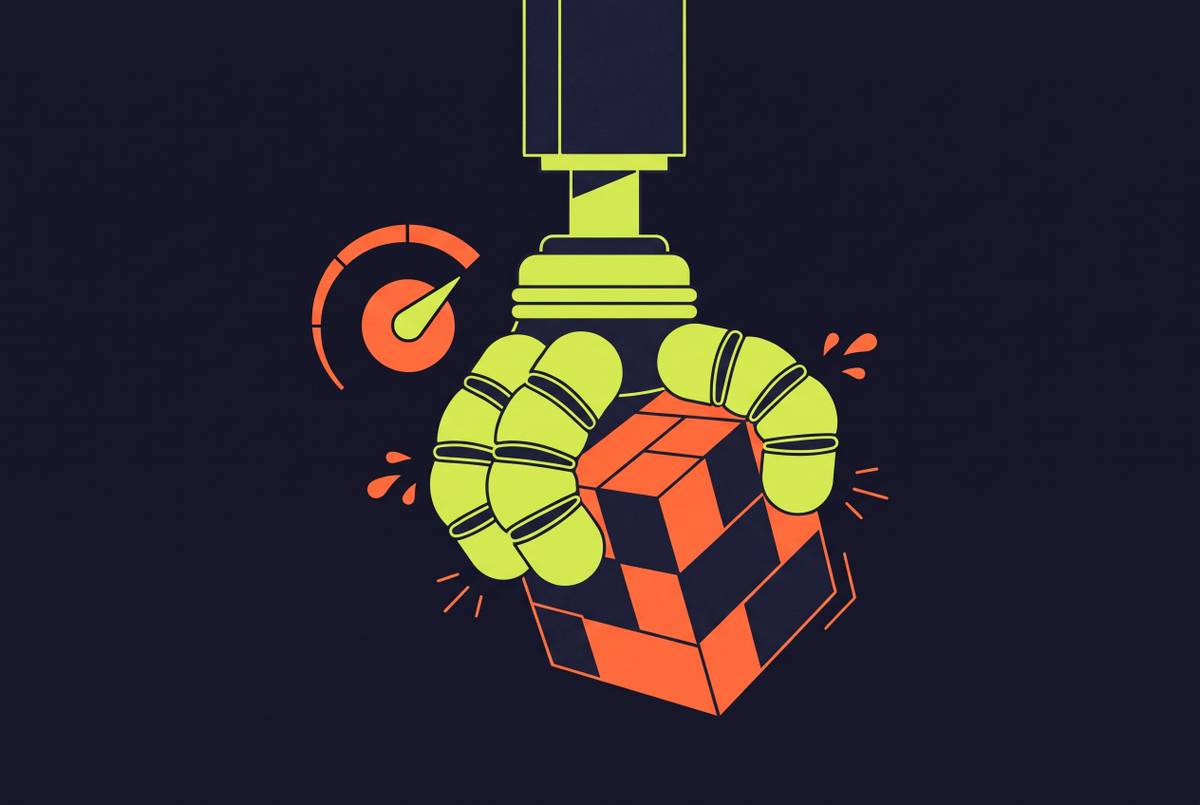
Soft gripper payload depends on part shape, actuation, and conditions.
Theo Osei-Bonsu
Staff Writer, Automation Economics
Theo Osei-Bonsu holds a master's in industrial economics from Georgia Tech and reported on labor markets and offshoring for a manufacturing trade press group for nearly a decade before shifting his beat to automation's displacement and investment calculus. He brings a rigorous, numbers-first lens to questions of ROI, workforce transition, and capital allocation on the factory floor.
12 stories
Soft gripper payload depends on part shape, actuation, and conditions.
Standard break-even math misleads on small batches, so rebuild it around changeovers.
An 85% OEE target fits only some processes, so benchmark by type.
Robots can now feel what they grip, preventing damage to fragile objects.
The 5-to-15% annual maintenance rule hides unplanned failures that cost multiples more.
How CAD rendering and generative models fill factory data gaps.
Pendant teaches cost ten times more downtime than offline methods for the same job.
Manufacturers are redeploying idle robots to new lines rather than buying fresh units.
Robots need real-world training after deployment, not just factory pretraining.
Robots feel their way through tight tolerances when position alone falls short.
VLAs generalize across language but fail on unseen tables in ways benchmarks don't catch.
Automation's real payback comes from yield, throughput, and quality—not just cutting labor costs.